
Termite Control in Pretoria & Centurion
That Protects Your Property
Looking for professional termite control in Pretoria and Centurion? Greenline Pest Control provides termite inspections, treatment and prevention for homes and businesses, with targeted solutions for active infestations and long-term property protection.
Serving Pretoria, Centurion and surrounding areas
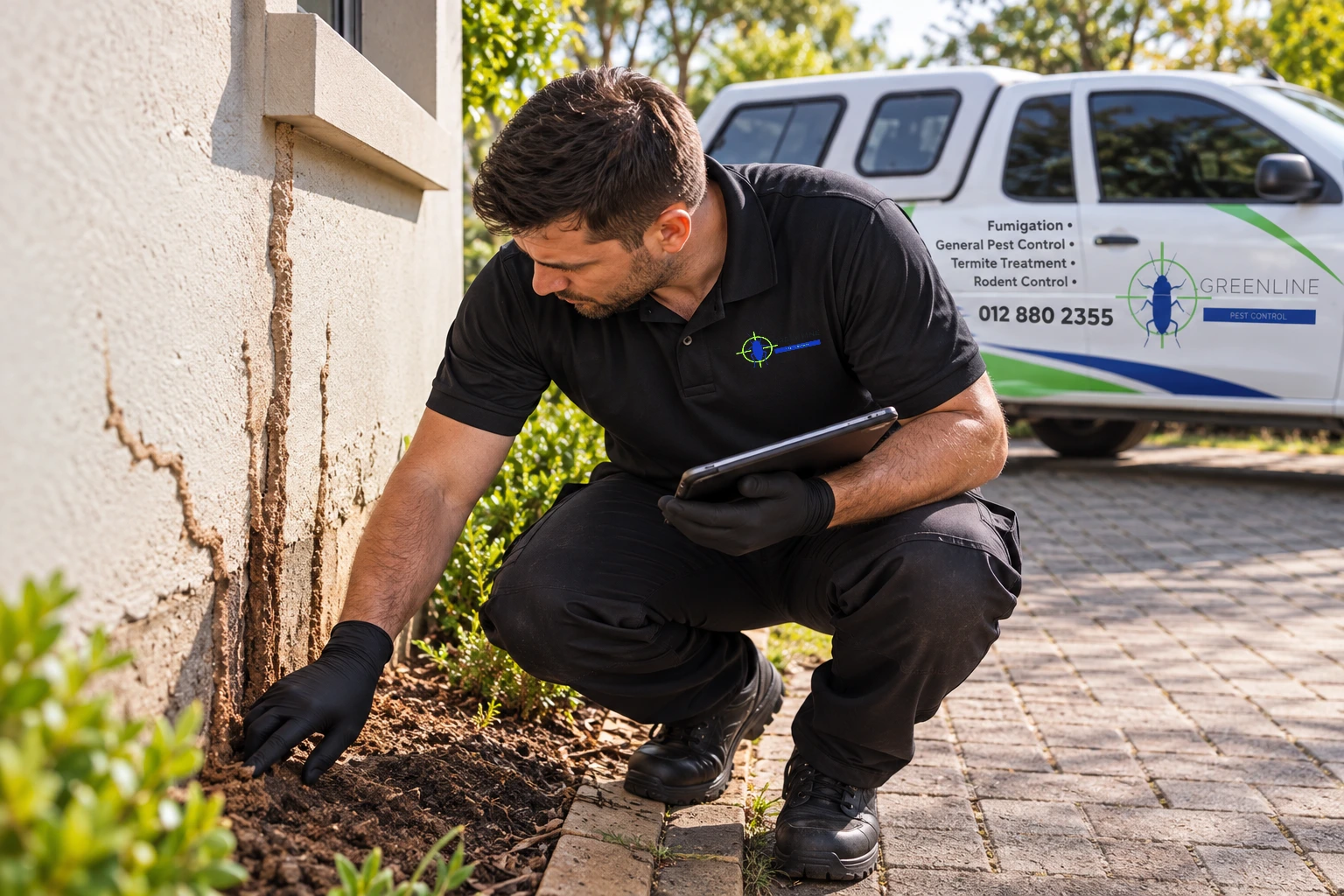
Protecting Your Property
Professional, Proven Solutions
Department of Agriculture
5-Year Termite Guarantee
Not Every Termite Problem Is the Same
Termites can damage both buildings and lawns, but the type of termite and the treatment required are not always the same. Correct identification is the first step towards choosing the right treatment and protecting your property.
Identifying the termite species and where the activity is occurring helps determine the most effective treatment approach.
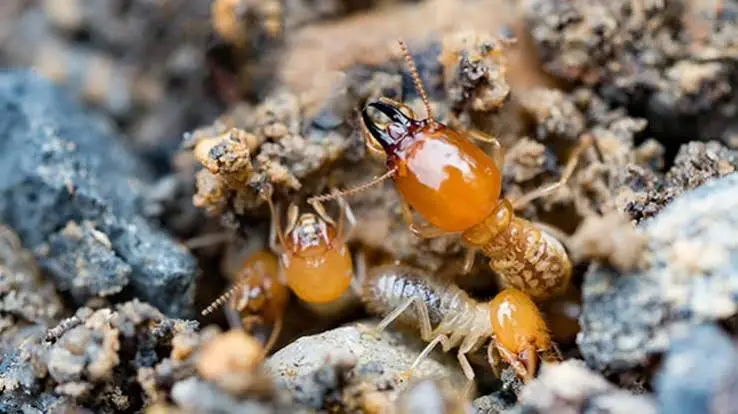
Termites In & Around Buildings
Subterranean termites live in underground colonies and can enter buildings through the soil, foundations and hidden access points. They feed on wood and other cellulose materials, often causing damage out of sight before the infestation is discovered.
- Mud or soil tubes along foundations or brickwork
- Activity around foundations and building edges
- Damaged or hollow timber
- Swarmers or discarded wings around doors and windows
Termites Damaging Your Lawn?
Harvester termites live underground and forage for grass and plant material. They can quickly damage lawns by cutting and removing grass, leaving bare or thinning patches that spread while the colony remains active.
- Bare or thinning lawn patches
- Small openings in the soil
- Termites carrying pieces of grass
- Visible foraging activity
Identify the Termite Problem
Treatments You Can Trust
Homes, Buildings & Lawns
Prevention & Ongoing Advice
Where Termites Can Enter Your Property
Subterranean termites live in colonies associated with the soil and can reach buildings through small gaps, cracks and concealed entry points. Because much of this activity can occur out of sight, the first visible signs may appear away from where the termites originally entered.
A professional termite inspection looks beyond the visible signs to identify where termite activity is occurring and which areas of the property may require closer attention.
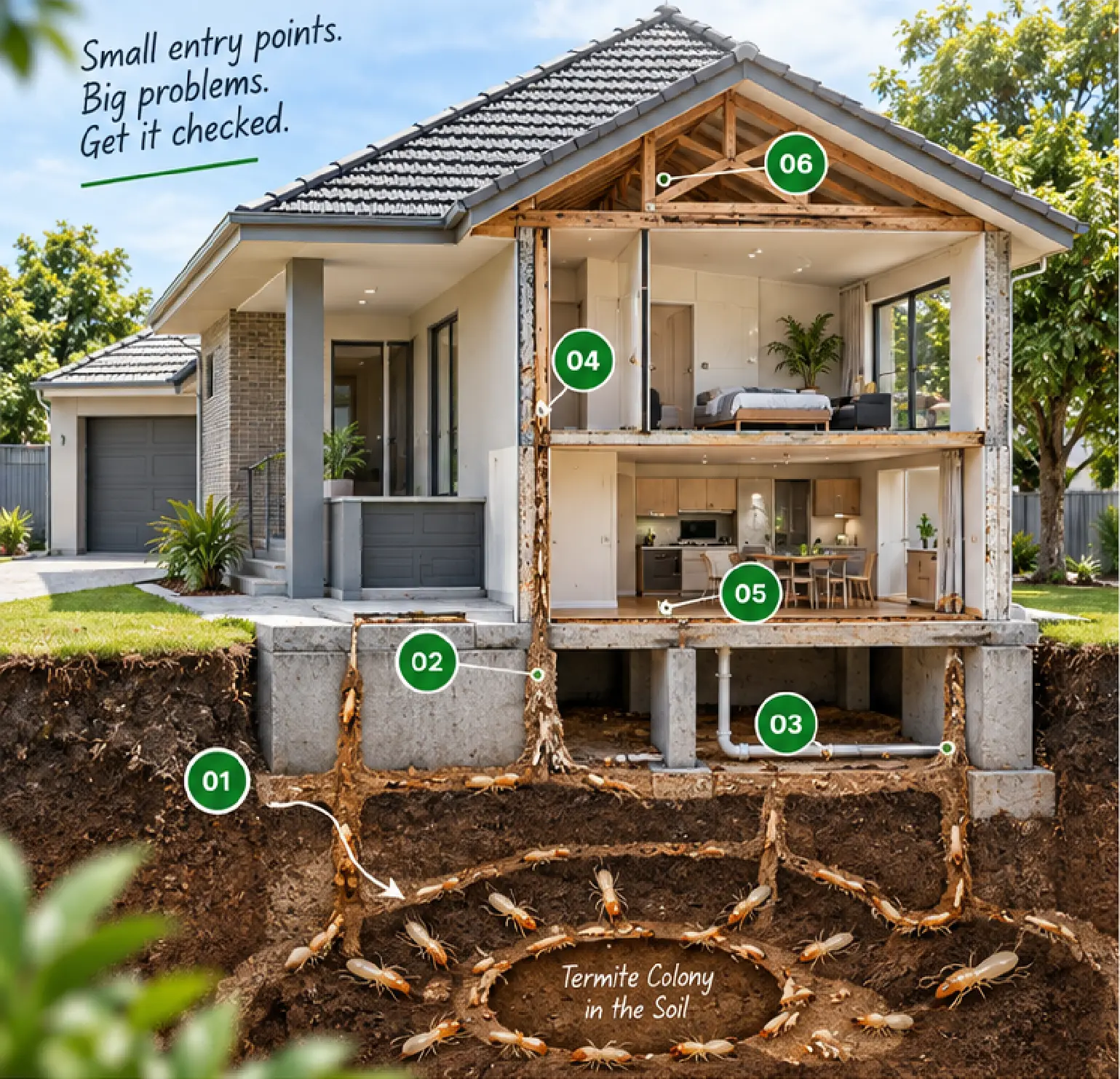
What You See May Not Be Where the Problem Started
Finding termite activity in one area does not necessarily reveal where the termites entered. A professional termite inspection helps trace visible activity and surrounding areas to identify the source before the appropriate treatment is recommended.
01 Foundations & Soil
Subterranean termites travel through the soil and can enter buildings where foundations and structural elements meet the ground.
02 Cracks & Construction Joints
Small cracks, construction joints and gaps in concrete can provide concealed pathways for subterranean termites to enter a building.
03 Service Entry Points
Gaps around pipes, plumbing and other services entering the building can create concealed access points for subterranean termites.
04 Walls & Concealed Voids
Wall cavities and other concealed voids can allow termite activity to remain hidden while termites move through the structure.
05 Floors, Skirting & Door Frames
Termite activity may become visible around floors, skirting boards and door frames, particularly where timber or other cellulose materials are accessible.
06 Structural Timber
Once termites gain access to a building, they can feed on structural timber and other cellulose materials, with damage often developing out of sight.
Treatments to Industry Standards
Soil Treatment Before Building
Treatment for Existing Buildings
On Qualifying Treatments
Why Termite Activity Shouldn’t Be Ignored
Termite activity can be difficult to detect because much of it may occur inside timber, behind walls or in other concealed areas. By the time visible signs appear, termites may already be active elsewhere on the property.
Early inspection and correct identification help determine where termite activity is occurring and which treatment approach is appropriate.
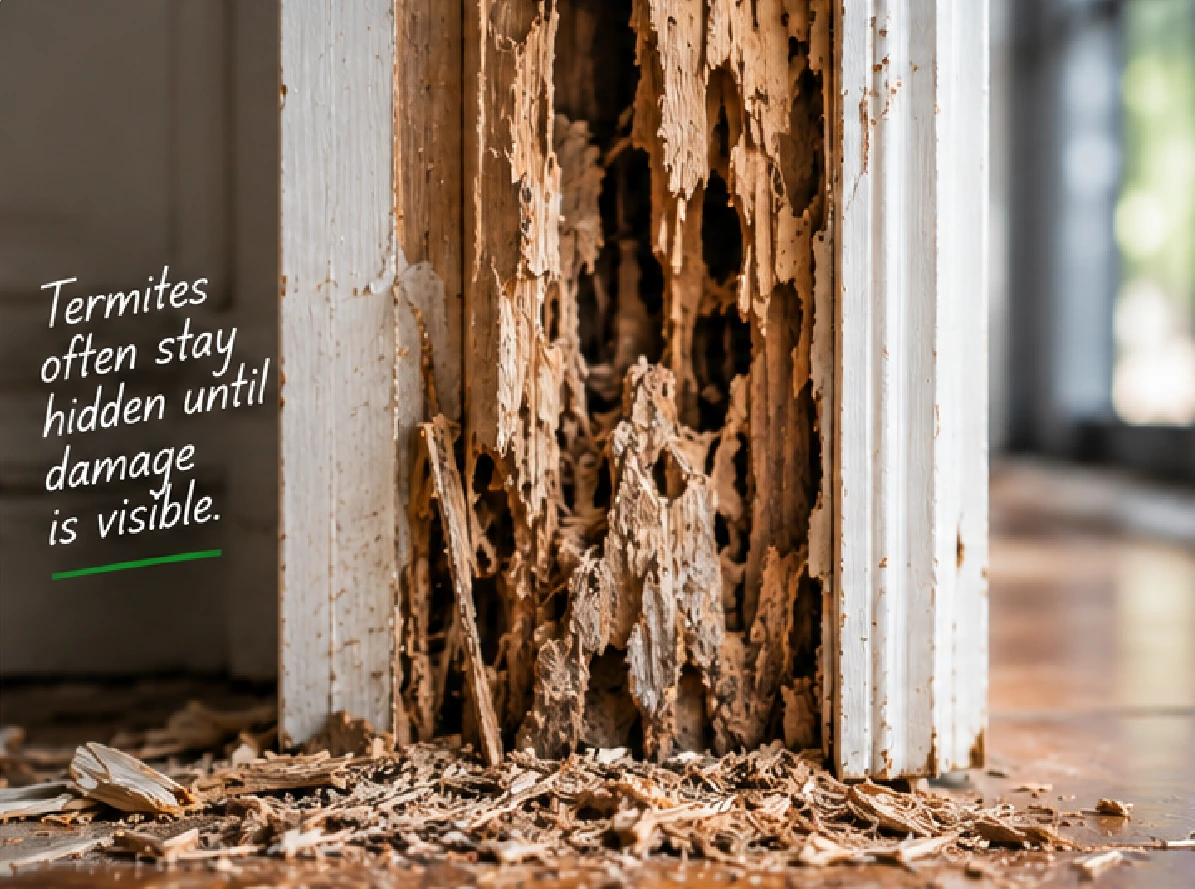
Found Something Suspicious?
You don’t need to identify the problem yourself. Greenline Pest Control can inspect the activity, identify the termite problem and recommend the appropriate treatment for your property.
01 Activity Can Stay Hidden
Termites can remain active inside timber, wall cavities and other concealed areas without obvious signs at the surface.
02 Damage Can Develop Out of Sight
Termites can feed on timber from the inside, allowing damage to develop before obvious surface signs become visible.
03 Visible Signs May Appear Late
Mud tubes, hollow timber or damaged wood may only become noticeable after termite activity has already been present for some time.
04 Structural Timber Can Be Affected
Where structural timber is accessible, ongoing termite activity can weaken affected wood and lead to increasingly serious damage.
05 Repairs Can Become More Costly
The longer termite damage develops unnoticed, the more extensive repairs may become, particularly where timber and building components are affected.
06 Early Inspection Makes a Difference
Early inspection can help identify termite activity, assess affected areas and determine the appropriate treatment before further damage develops.
Identify Activity Sooner
Check Visible & Hidden Areas
Based on Termite Activity
Help Prevent Further Damage
A Thorough Termite Inspection Starts
With the Right Assessment
A professional termite inspection helps identify signs of termite activity, affected areas and possible entry points before treatment is recommended. Greenline Pest Control inspects visible activity and surrounding areas to understand the problem and recommend an appropriate treatment approach.
STEP 1
Inspect & Assess
We inspect foundations, entry points, structural timber and surrounding soil for signs of termite activity and affected areas.
STEP 2
Identify & Explain
We identify the termite type and affected areas, explain what we find and highlight where treatment may be required.
STEP 3
Treatment Plan
We recommend targeted termite treatment based on the activity, affected areas and property conditions.
STEP 4
Treat & Advise
We carry out the termite treatment and provide practical advice to help reduce the risk of future activity.
Let’s Get It Checked
Found possible termite activity? Greenline Pest Control can inspect the property, identify the problem and recommend the appropriate treatment.
Protecting Your Building Before Construction Begins
Pre-construction termite treatment helps protect new buildings against subterranean termite entry from the soil. Greenline Pest Control treats designated soil areas at key construction stages before they are covered by foundations, floor slabs or other building elements.
Correct timing and application are important because treated areas can become difficult to access as construction progresses.
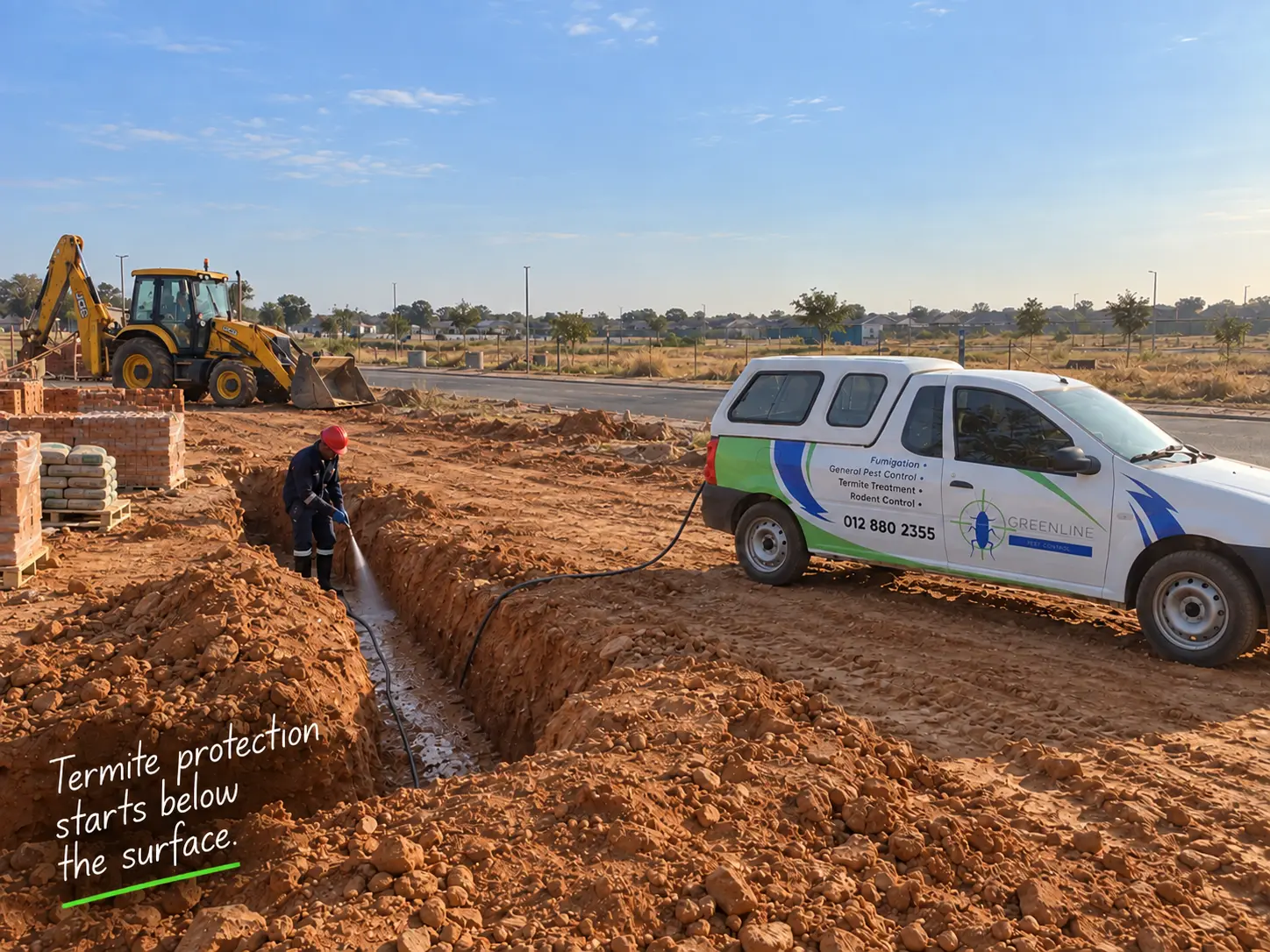
Build Right From The Ground Up
Pre-construction termite treatment protects key soil areas before they become inaccessible. Greenline Pest Control works with homeowners, builders and contractors across Pretoria and Centurion to coordinate treatment with the relevant construction stages
01 Site Assessment
We assess the construction site, building plans and soil areas to identify where pre-construction termite treatment is required.
02 Soil Treatment
SABS/SANS-approved termiticide is applied to designated soil areas to create a treated zone beneath and around the building.
03 Critical Construction Areas
Treatment is applied to relevant areas such as foundation trenches, floor slab areas and service penetrations, depending on the building design.
04 Right-Stage Coordination
We coordinate treatment with the construction programme so designated areas are treated at the correct stage before they are covered or become inaccessible.
Department of Agriculture
Qualifying Pre-Construction
Issued on Completion
Registered Termiticide
Protecting Existing Buildings From Subterranean Termites
Post-construction termite treatment is used for existing buildings where subterranean termite protection is required after construction. Treatment may include accessible soil around the building, areas beneath paving or concrete, and other potential termite entry points.
Greenline Pest Control provides professional post-construction termite treatment in Pretoria and Centurion, using targeted treatment methods based on the property, termite activity and areas requiring treatment.
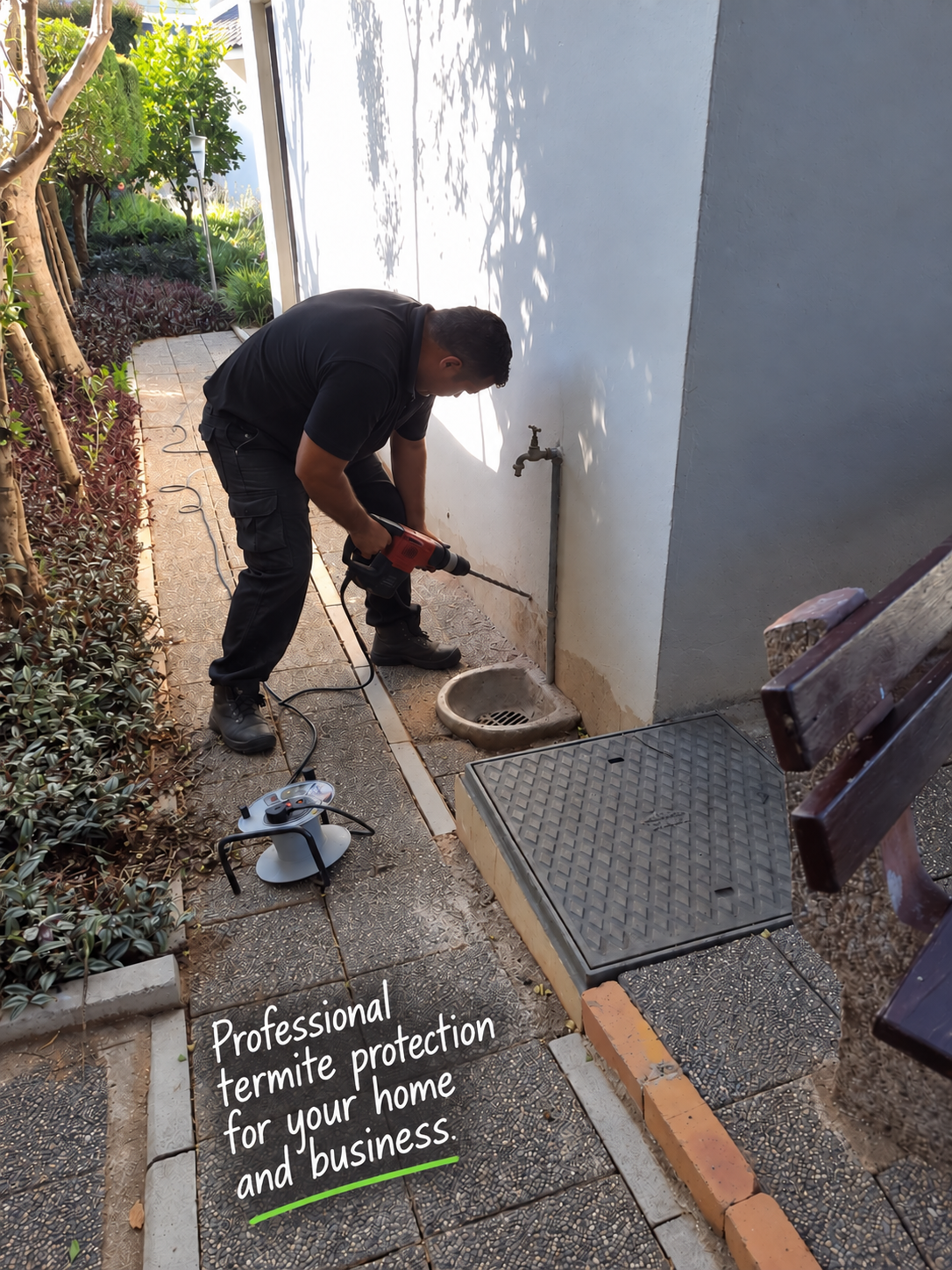
Protect What You've Built
Whether you’ve discovered termite activity or need protection for an existing property, Greenline Pest Control provides post-construction termite treatment for homes and businesses across Pretoria and Centurion.
01 Perimeter Soil Treatment
Accessible soil around the building perimeter is treated to help create a treated zone against subterranean termite entry.
02 Drill & Inject Treatment
Where paving or concrete limits access to the soil, small holes may be drilled so termiticide can be injected into the soil beneath.
03 Targeted Entry Points
Potential termite entry points around foundations, service penetrations and other accessible areas are identified and treated where required.
04 Property-Specific Treatment
The treatment method is selected according to the building layout, termite activity, accessible soil areas and conditions found during the inspection.
Department of Agriculture
Qualifying Pre-Construction
Issued on Completion
Registered Termiticide
— OUR SERVICE AREAS —
Termite Control
Pretoria & Centurion
Greenline Pest Control provides professional free termite inspections and termite treatments across Pretoria and Centurion for homes, businesses, existing buildings and construction projects.
Whether you’ve noticed possible termite activity around your property or require pre-construction or post-construction termite treatment, we can assess the problem and recommend an appropriate treatment approach.


Pretoria & Centurion
Homes, complexes & businesses
Protect what you've Build
Frequently Asked Questions About Termite Pest Control
Answers to common questions about our pest control services in Pretoria & Centurion.
Common signs can include mud or soil tubes, damaged or hollow-sounding timber, discarded wings, swarmers and termite activity around foundations or other parts of a building.
Because termite activity can occur in concealed areas, a professional inspection can help identify the problem and determine whether treatment is required.
Subterranean termites are associated with soil and may gain concealed access to buildings, where susceptible timber can be damaged.
Harvester termites primarily forage for grass and plant material and are commonly noticed through activity and bare or thinning patches in lawns.
Correct identification is important because the treatment approach can differ.
Subterranean termites can travel from the soil towards a building and may gain access through cracks, construction joints, service penetrations and other concealed entry points.
The visible termite activity inside a building may not necessarily show where the original entry occurred.
Yes. Termite activity can occur inside timber, wall cavities and other concealed areas, which means damage may develop before obvious surface signs are noticed.
If you find suspicious activity, it is better to have it identified than to rely only on what is visible.
Pre-construction termite treatment involves treating designated soil areas at appropriate stages of construction before foundations, floor slabs or other building elements make those areas difficult to access.
It is intended to help protect the completed structure against subterranean termite entry from the soil.
Yes. Post-construction termite treatment is designed for completed buildings.
Depending on the property and areas requiring treatment, this may involve accessible perimeter soil treatment, drilling and injection beneath hard surfaces, and treatment around relevant termite entry areas.
Greenline Pest Control provides professional termite inspections and termite treatment throughout Pretoria and Centurion, including services for homes, businesses, existing buildings and construction projects.